Tomatoes
Ripe plum tomatoes add body and sweetness. Roasting concentrates them; raw dicing keeps them juicy and light.
Salsa is where a taco gets corrected and brightened. Once you know what tomatoes, tomatillos, chiles, onion and lime each contribute, you can taste and adjust instead of measuring anxiously.
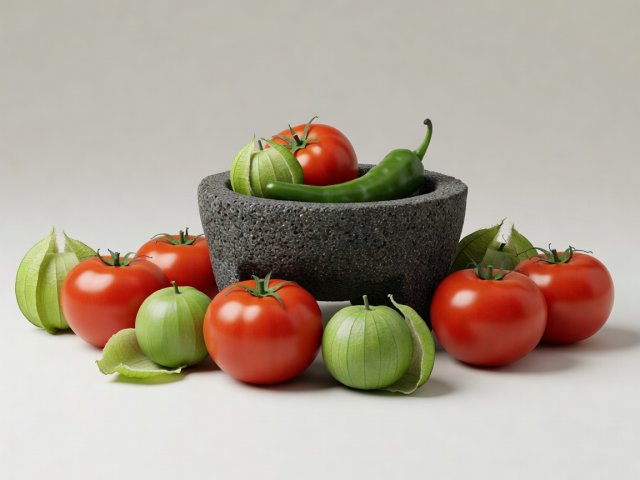
Every salsa balances acidity, heat, salt and freshness. A rich filling, such as fried potatoes or cheese, wants more acid and fresh herbs. A delicate filling, like courgette or squash blossoms, wants depth and gentle heat so it is not drowned out.
Ripe plum tomatoes add body and sweetness. Roasting concentrates them; raw dicing keeps them juicy and light.
Related to the cape gooseberry, not the tomato. Remove the papery husk and rinse off the sticky film. They give salsa verde its tang and body.
Fresh serranos and jalapeños bring grassy, sharp heat. Dried chiles bring roundness and colour. Seeds and veins hold most of the fire.
White onion adds crunch and bite, garlic adds depth, coriander adds freshness, and lime sharpens everything at the end.
4 plum tomatoes, diced · ½ white onion, finely chopped · 1–2 serranos, minced · small handful coriander · juice of 1 lime · salt
Mix, salt, and rest 10 minutes. Drain excess liquid if it pools. Best with rich or crisp fillings.
500 g tomatillos · 1–2 jalapeños · ¼ onion · 2 garlic cloves (unpeeled) · coriander · salt
Char tomatillos, chiles and onion under a grill until blistered. Peel garlic, blend with coriander and a splash of water.
4 guajillos · 1–2 chiles de árbol · 2 roasted tomatoes · 1 garlic clove · pinch cumin · salt
Toast and soak chiles 15 minutes, blend with tomatoes and garlic, then simmer in a little oil for 5 minutes to deepen.
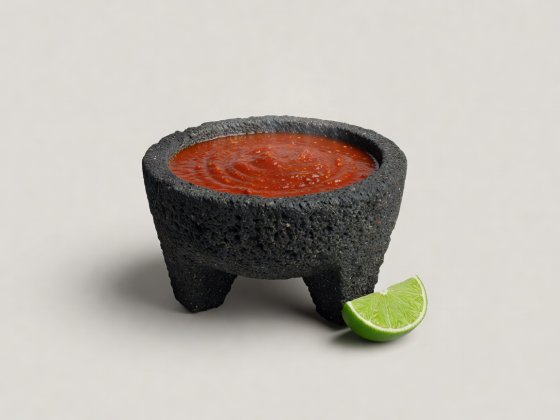
Match the salsa to what the filling lacks. Earthy black beans welcome a bright salsa verde. Sweet roasted squash likes the sharpness of chile de árbol. Creamy rajas need the crunch and acidity of pico de gallo. Smoky mushrooms pair well with a fruity guajillo salsa that echoes their depth.
Fruit salsas with mango or pineapple are popular Mexican-inspired additions; pineapple has a real place alongside tacos al pastor in Mexico City, but most fruit salsas are modern home adaptations. Enjoy them, and simply call them what they are.
| If you lack | Use | Adjust by |
|---|---|---|
| Tomatillos | Green tomatoes or firm unripe tomatoes | Adding extra lime for tartness |
| Serrano chiles | Jalapeños | Using a little more; they are milder |
| Fresh coriander | Flat-leaf parsley with lime zest | Accepting a greener, less citrus flavour |
| A molcajete | Blender pulsed briefly, or a mortar and pestle | Pulsing to avoid a foamy, aerated texture |
Regional context: in Oaxaca you may find salsas with chapulines or pasilla mixe, while the Yucatán favours fiery habanero salsas sharpened with sour orange. Our recipes are widely adaptable starting points, not a regional rulebook.